“Victory Fields Can Save Our Lives” – Smart Boyce
TRADITIONAL MAIZE FARMING
Smart Boyce (photo in blue, with F2F Program Director Lameck Mandevu) has known extreme poverty 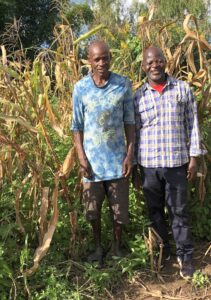 his whole life. Like most Malawians, Smart relies on growing maize in the rainy season. Every year, Smart hoes ridges, sows maize seed, applies fertilizer if it’s available, and hopes the rain falls steadily and evenly. Climate change, however, has made the rains unreliable.
VICTORY MAIZE FIELDS
Like victory gardens, F2F’s victory maize fields use organic practices that focus on building healthy, living soil. With mulch, compost, and manure, victory fields eliminate the need for villagers to buy anything other than seeds — and F2F teaches how to harvest the best seeds from one’s own crop.
At first, Smart was skeptical. But within a month of planting both ways, Smart saw profound differences.
FOOD VS NO FOOD
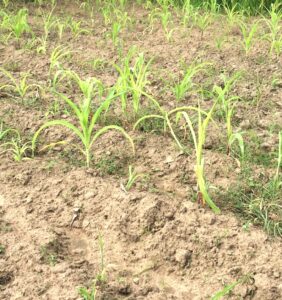
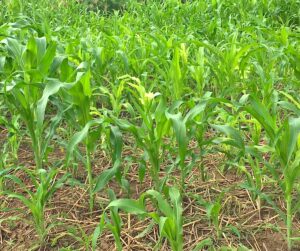
Soon after planting, erratic dry spells decimated Smart’s traditionally grown maize seedlings (photo below top). Smart’s victory field (photo below bottom) retained soil moisture and yielded 50 times more maize than his traditional field. Smart also harvested cover crops like beans from his victory field.
This year, as the Iran war threatens fertilizer supplies and a strong El Niño portends drought conditions, Malawians desperately need a resilient way to grow their own food.
Victory gardens and fields offer that life-saving strategy.